English
 Français
 Deutsch
 Русский
 Italiano
 Español
 Português
 عربي
عربي แบบไทย
 中文
中文

Based on cross section, transmission V-belts are mainly classified into wrapped V-belts and cogged V-belts.
1. Wrapped V-Belts are covered with a special fabric, featuring a smooth surface without cogged profiles.
Key Features: Good wear resistance, heat resistance and impact resistance, low running noise, high overall rigidity and stable power transmission.
Application: Positions prone to clogging and slipping.
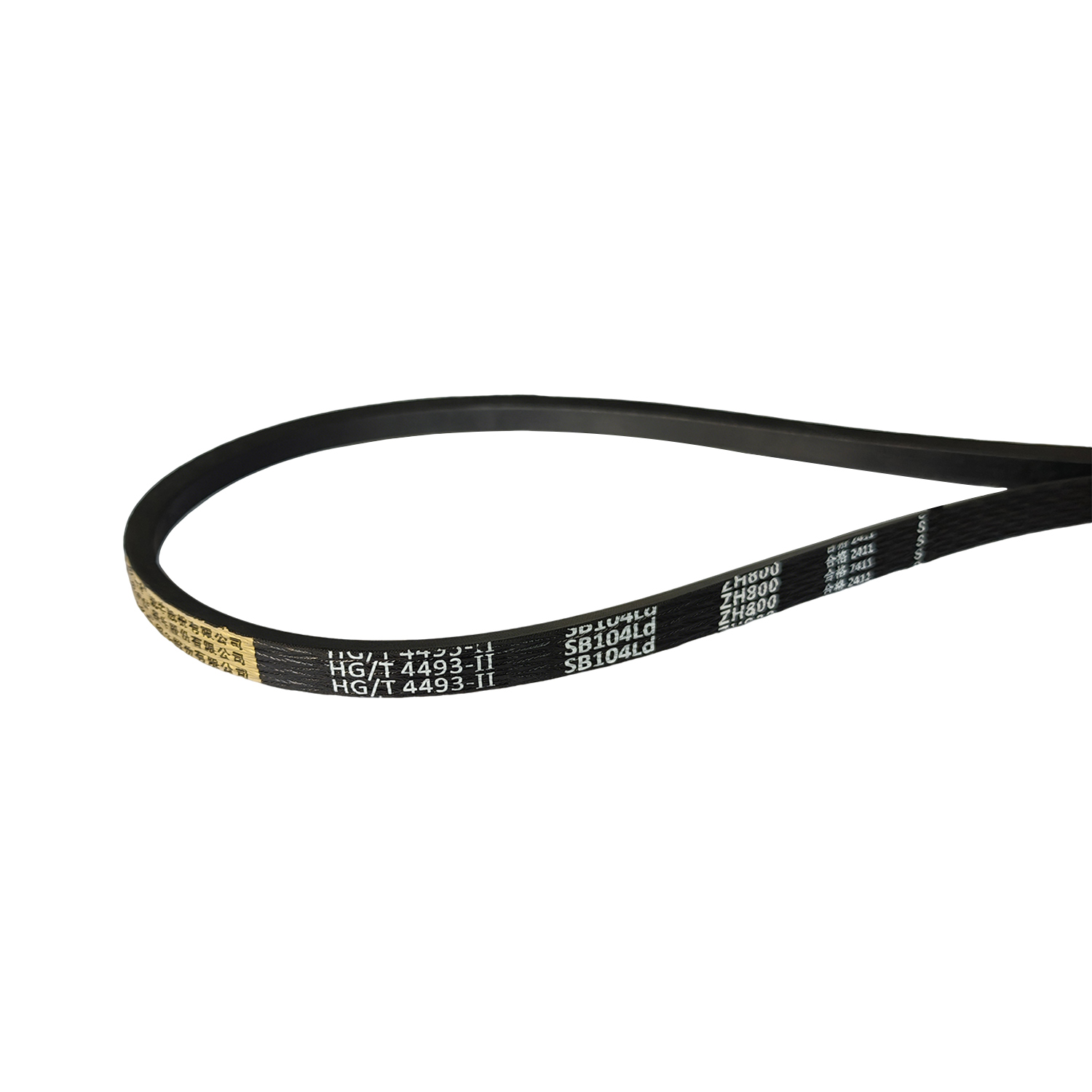
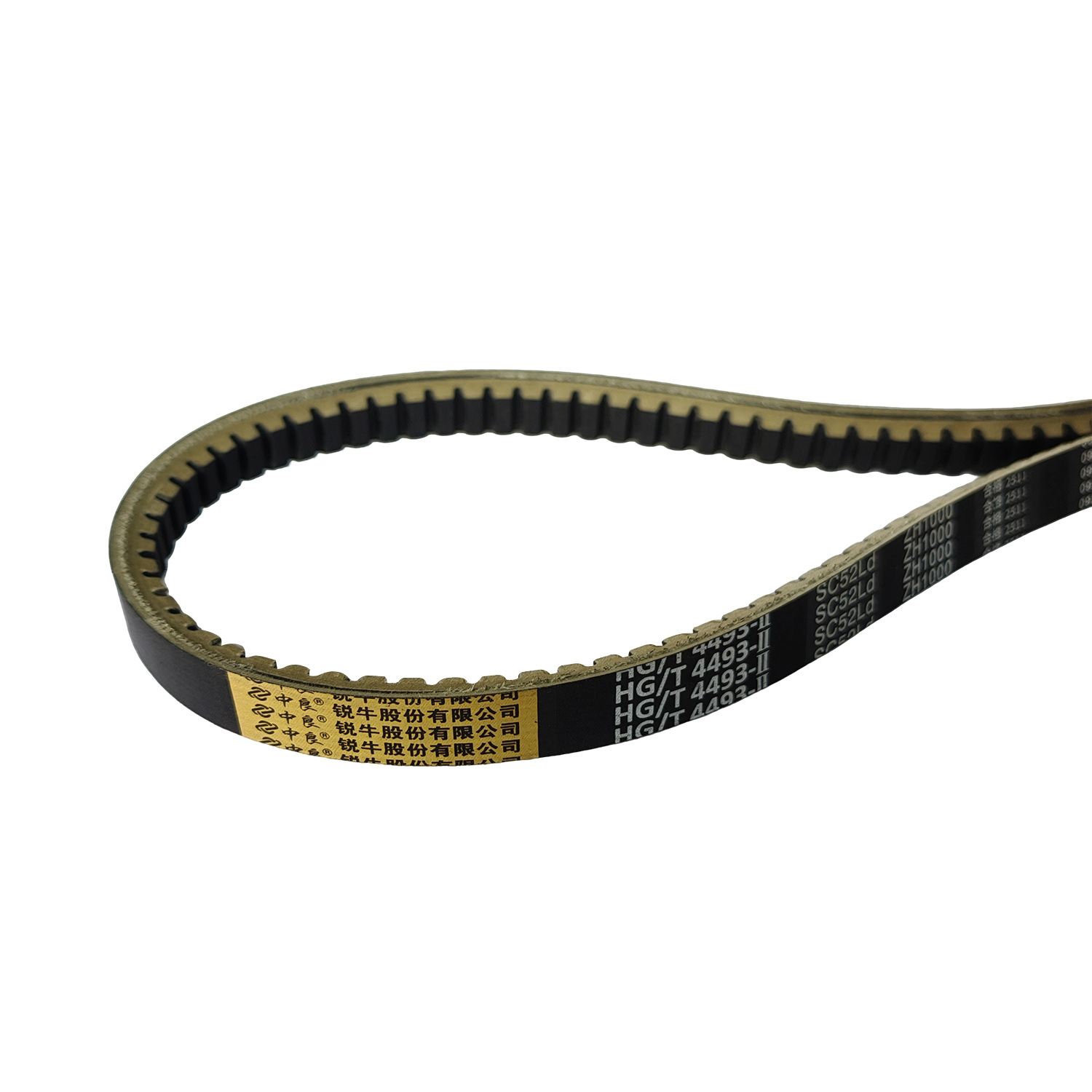
2. Cogged V-Belt (Cut-edge V-Belt) are available in single-sided inner cog and double-sided cog types.
Key Features: Excellent flex resistance, good heat dissipation and high power transmission capacity.
Application: Locations with high ambient temperature, high transmitted power and compact installation space, such as variable-speed assemblies of agricultural machinery and fan drive positions.
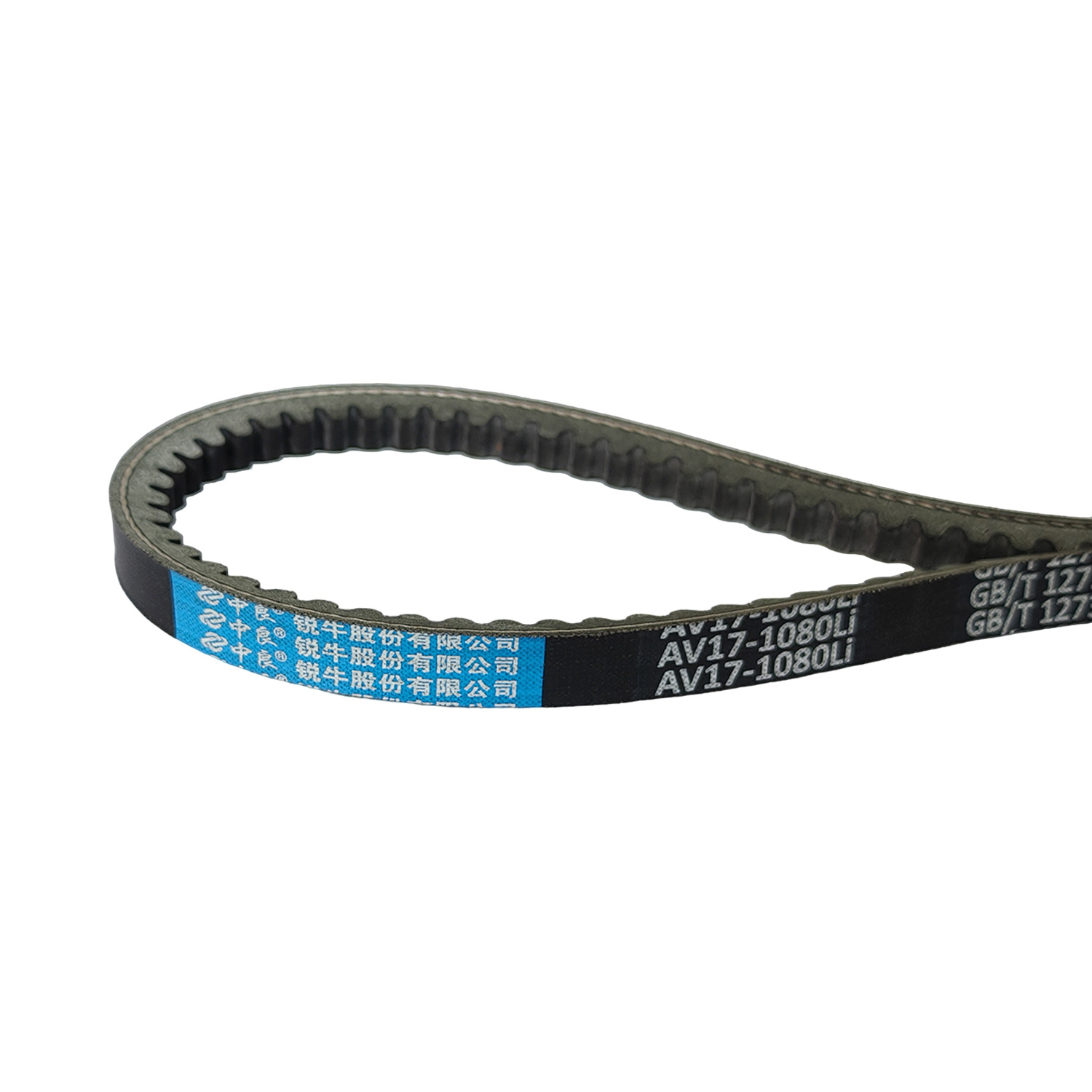
A V-belt consists of a tensile cord skeleton and rubber compound. Our main products adopt two types of tensile skeletons (polyester and aramid), combined with neoprene rubber, forming two primary material combinations. These materials differ greatly in temperature resistance, wear resistance, ageing resistance and tensile performance.
Tensile cords: polyester;
rubber : neoprene.
Features: Cost-effective with balanced overall performance, good wear resistance, flex resistance and moderate anti-ageing property. Operating temperature range: -20℃ ~ 80℃. It is the standard material for general equipment, suitable for normal-temperature and regular-load transmission scenarios, and is the most common basic V-belt on the market.
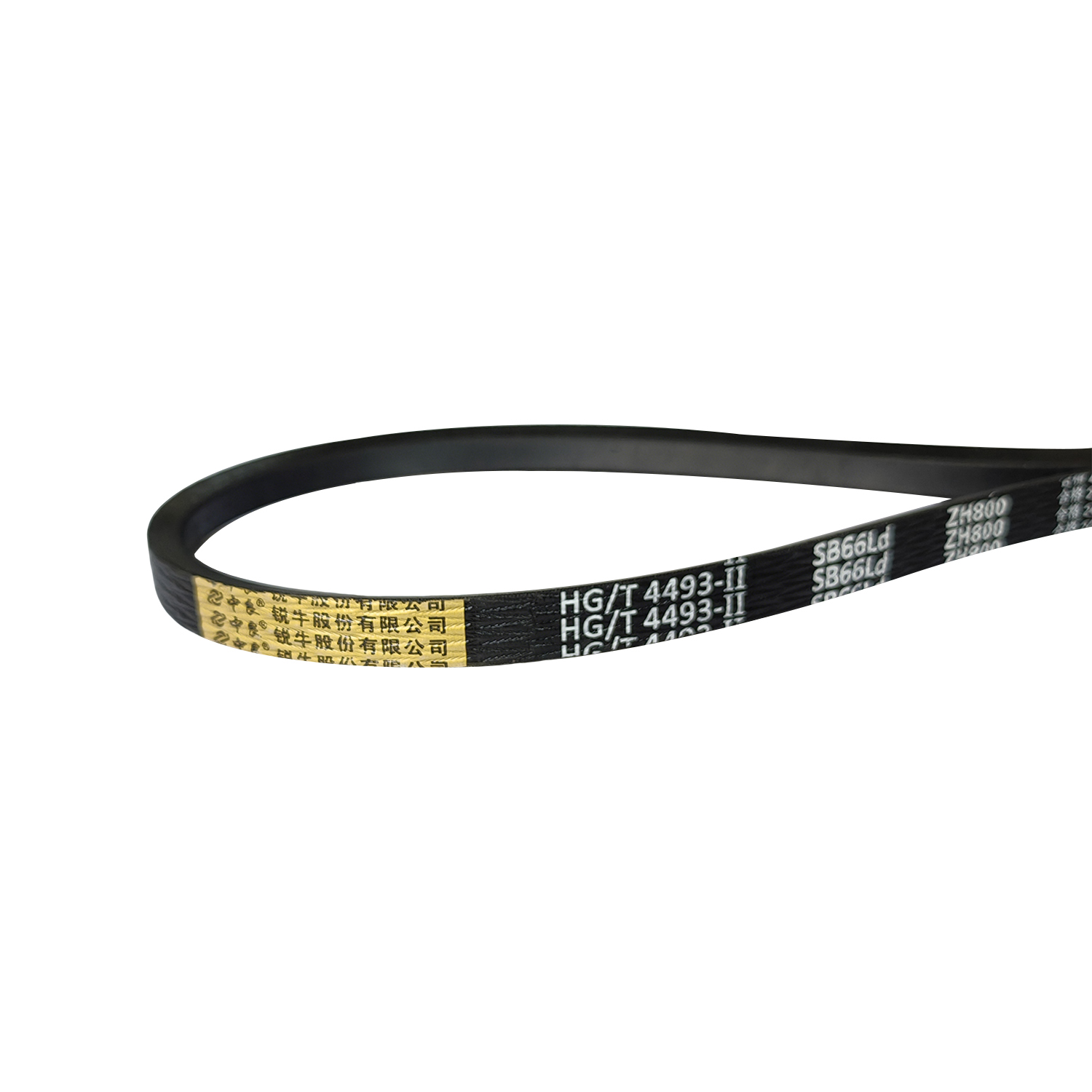
Tensile cords: aramid fiber (high-strength special fiber);
rubber matrix: neoprene.
Features: Its tensile strength far exceeds polyester. It features minimal elongation, excellent impact resistance and tear resistance with higher load capacity. Suitable for heavy-duty, intermittent shock loads, long-term high-load industrial equipment and agricultural harvesters under complicated operating conditions.
V-belt types are defined by cross-section width, height and V-angle, which are core indicators for distinguishing specifications.
In the rubber transmission industry, V-belts are divided into five categories: classical V-belts, narrow V-belts, hexagonal V-belts, agricultural variable-speed belts and light-duty thin V-belts. Each category complies with dedicated national, European and American standards.
Models: A, B, C, D, O
| MODEL | TOP WIDTH(MM) | THICKNESS(MM) |
| Z |
10 |
6 |
| A | 13 | 8 |
| B | 17 | 11 |
| C | 22 | 14 |
| D | 32 | 19 |
| E | 38 | 23 |
Models: 3V, 5V, 8V, SPA, SPB, SPC, SPZ
| MODEL | TOP WIDTH(MM) | THICKNESS(MM) |
| 3V | 9.5 | 8 |
| 5V | 16 | 13.5 |
| 8V | 25.5 | 23 |
| SPZ | 10 | 8 |
| SPA | 13 | 10 |
| SPB | 17 | 14 |
| SPC | 22 | 18 |
| MODEL | TOP WIDTH(MM) | THICKNESS(MM) |
| AA | 13 | 10 |
| BB | 17 | 13 |
| CC | 22 | 17 |
Designed specifically for power transmission of agricultural machinery and special machinery.
| MODEL | TOP WIDTH(MM) | THICKNESS(MM) |
| HI | 25.4 | 12.7 |
| HJ | 31.8 | 15.1 |
| HK | 38.1 | 17.5 |
| HL | 44.5 | 24 |
| HM | 50.8 | 25 |
| HN | 57.2 | 25 |
| 56MM | 63.5 | 27 |
| HO | 68 | 28.5 |
| HQ | 76.2 | 30 |
Lightweight and thinned version derived from classical V-belts. Better flexibility and lower running resistance for light loads. Models: SB, SC
| MODEL | TOP WIDTH(MM) | THICKNESS(MM) |
| SA | 13 | 7 |
| SB | 17 | 9 |
| SC | 22 | 11 |
Four length definitions are commonly used in the V-belt industry. Different brands and standards adopt different marking methods, which is the main cause of selection errors. It is critical to distinguish outer circumference, inner circumference, effective length and datum length to match pulley parameters.
1. Visual check.
2. Working condition judgment.
3. Cross-section selection:
4. Length check.
If any question or customized requirement, please kindly message our customer service.
Email: info@ruiniubelt.com
WhatsApp: +86 188 5555 8821
Address: Yuqi Industrial Park, Huishan District, Wuxi City, China



 IPv6 network supported
Leave A Message